For the mother who needs an answer at 11pm.
I lead design and research at CMI, a platform that helps mothers find answers they can trust. This page is about how I ran the research and how it turned into what we designed.
Director of UX at Connecting Mothers Initiative. I run the research and lead product design.
“For our users, credibility means not spending hours searching for help and hitting walls.”
Watching mothers search for real answers.
I ran hybrid interviews that were part conversation, part observation. Each mother got a real task, like figuring out what to do for a sick child, and searched the way she normally would on her own device while I watched. Then a survey with over 500 responses backed it up at a larger scale.
67% of mothers in our survey said they find helpful content online. But they worry it's outdated, not meant for them, or written by someone trying to sell them something.
Maria is on her work break, sleep-deprived, scrolling results and not sure what to pick. Lisa finds a resource but ends up unsure what to do next.
She starts out discouraged and only feels relieved at the very end, after a lot of searching.
Maria and Lisa are working mothers who look for help on their phones, on short breaks. Maria wants resources that reflect her culture and support raising a bilingual child. Lisa is co-parenting on one salary and wants to feel sure of her choices. Neither has time to dig for answers, and both lean on other moms online.
What the research found, and what we designed
Every feature had to trace back to something mothers told us or showed us.
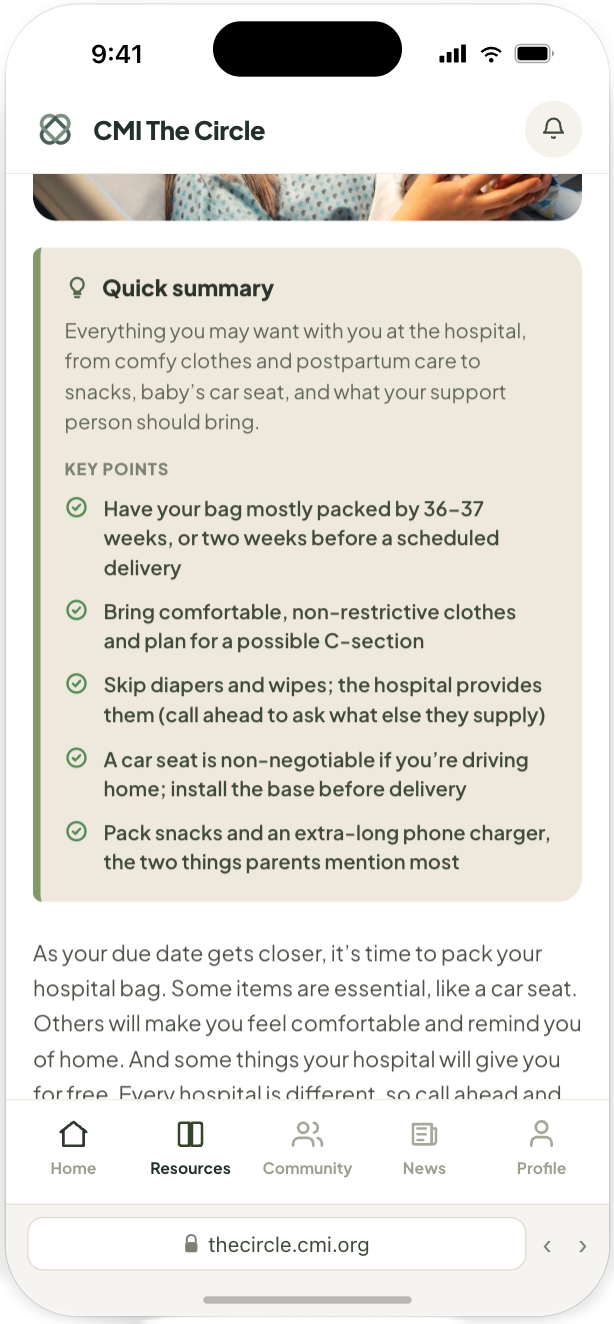
Articles: know before you read
When we watched mothers search, finding content wasn't the hard part. They had no way to tell if a piece would answer their question until they'd already read it. That's where Lisa gets stuck on the journey map.
Pulling in articles that already existed. It was the cheaper option. But it wouldn't help a mother know if an article was worth reading. Previews, summaries, and highlights take more work, and that's what the problem needed.
You can see what an article covers before you start. Read the highlights or the whole thing. Either way you get a full answer.
Building the recall feed with AI before asking anyone to run it
Motherhood News is a tab for recalls and safety alerts. I wanted mothers to have one place to check for recalls instead of hoping they'd hear about one. Recall notices are also hard to read, so each one gets a plain summary of what a parent should do, with the full notice still there if they want it.
A recall a parent can act on.
Mothers choose what they see. For now, alerts live on the platform and email is opt-in. We'll decide on anything bigger after testing.
What it takes to run it.
Before asking anyone to staff this, I built a working version with Claude Code to see what the job would really take. This is the workload and cost for one reviewer.
What a person checks
The reviewer reads every summary against the original recall. Claude doesn't get it wrong often. It added a word or two that wasn't in the original recall in 2 of the first 40.
- The product is right
- The ages it affects are right
- The hazard is right
- What a parent should do is clear
- Nothing is added that isn't in the original recall
Recalls also get rechecked for updates, so when a recall changes, the summary does too.
After I saw that, I added an error state, and now Claude checks its own summary against the original recall before a person reviews it. I'm also working with a content designer on clearer guidelines for how the summaries should read.
AI writes the first draft and a person decides what goes live. On a platform built on trust, I wouldn't ship it any other way.
Mothers are mothers.
Halfway through research, Elizabeth told me CMI would focus on military mothers. Before saying yes, I asked a lot of questions. The six themes still held. Military mothers are mothers first, so we didn't have to start over.
Then we ran a second round of research with military mothers to see how those themes show up for them. The same needs came up, with more pressure on them: moving often, partners on deployment, and support networks that get rebuilt again and again.
Help getting through a move or a deployment without starting over each time.
Ways to know a review or a resource can be trusted.
Support that fits her situation, not a one-size-fits-all feed.
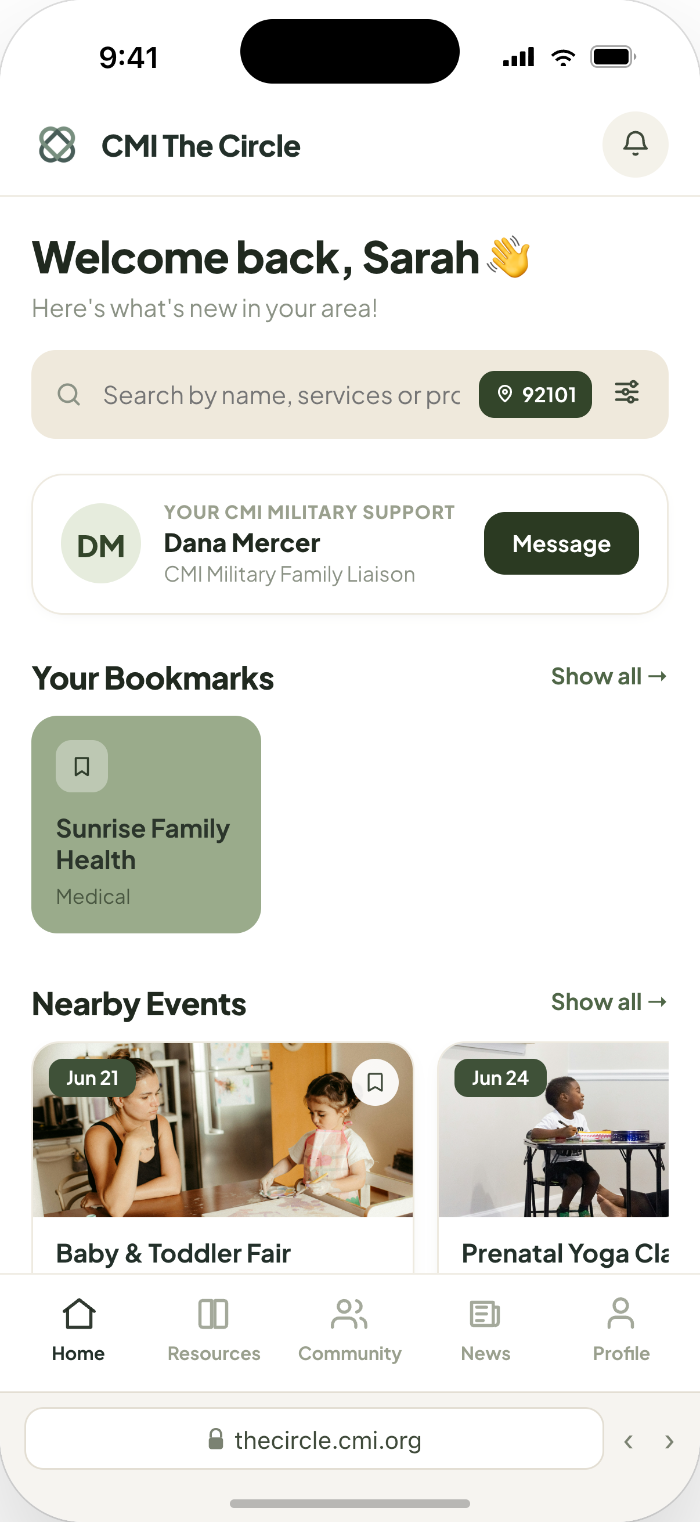
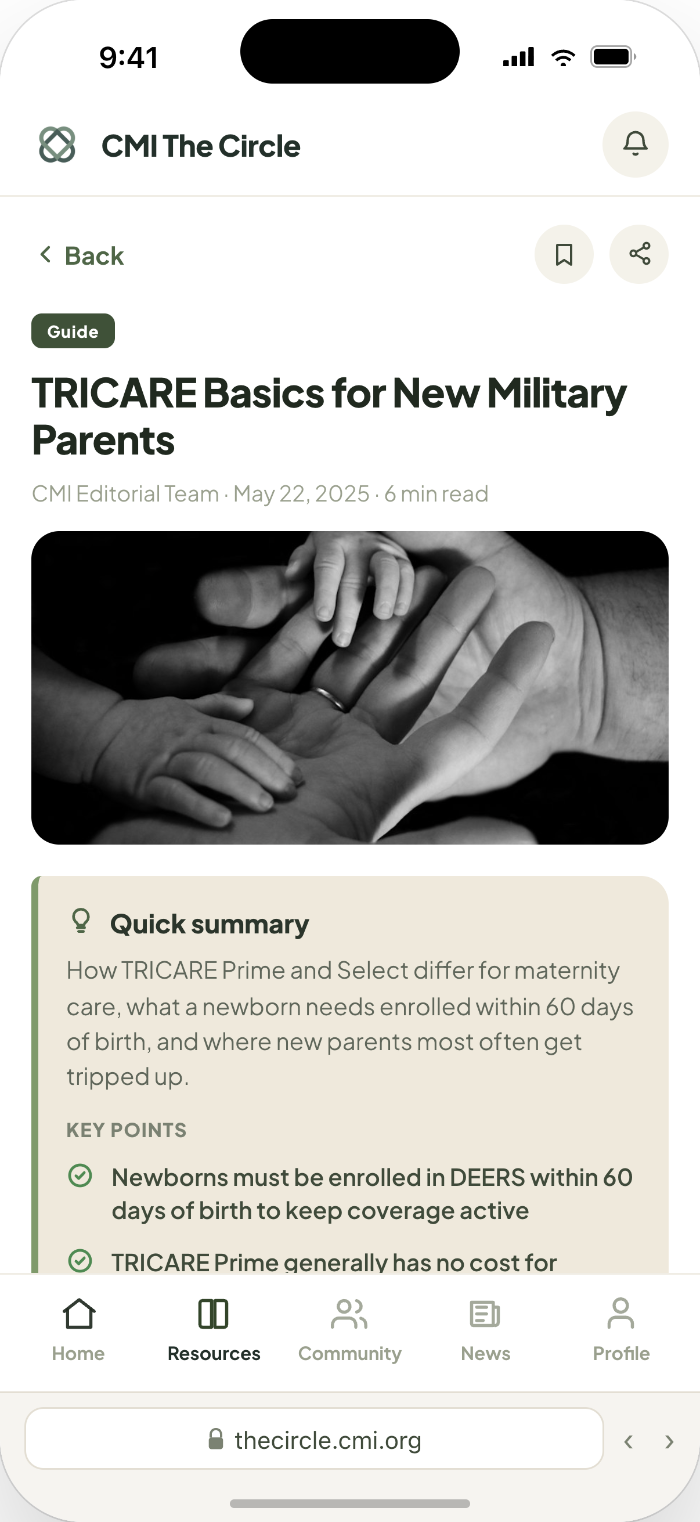
These are designed in the prototype. Some of this work stays private until launch, so this is a sample.
We haven't launched yet, so I don't have usage data. The prototype here was built to pitch for funding, and the recall feed is a working demo. What I can show is the research and the decisions that came from it.
What stuck with me most was listening back to the interviews. Mothers talked about having no support and nowhere they trusted to go. I understood the problem before. After hearing them, I felt it, and it changed how hard I'll push for them.
Rebuilding the lobby dashboard for 1.5 million guests a year.
Got a hard product problem? Let's talk.
I'm looking for senior and lead UX designer roles, hybrid or remote.